1-800-Simpson
 Email Us
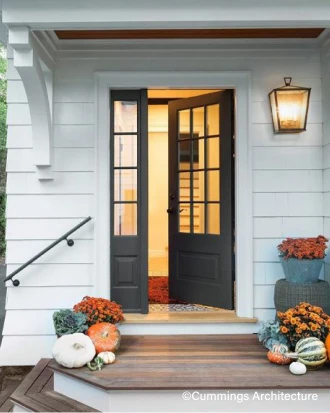
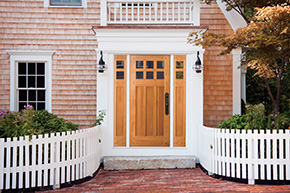
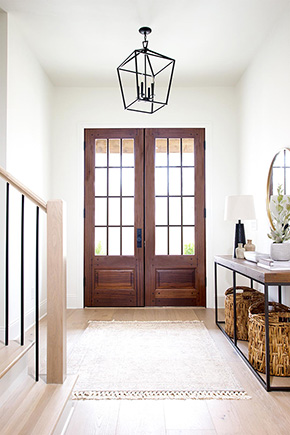
On Nantucket Island, a homeowner came to us with a simple but uncompromising request: real wood doors. Not fiberglass imitation; but authentic wood, with its natural grain and character. In certain historic districts on the island, that isn’t just a preference; it’s a requirement.
But Nantucket’s climate is unforgiving. Thirty miles off the Massachusetts coast, salt spray corrodes door finishes, humidity swings wildly between seasons, and wood never stops moving. Standard doors; even expensive ones—rarely last more than a few years. Panels split. Joints pull apart.
The usual fix is to install deep overhangs to shield doors from direct weather. For this home, that wasn’t an option; the design didn’t allow it. The homeowner had seen traditionally made doors fail repeatedly. They knew conventional construction couldn’t survive here, but they still wanted real wood.
Rethinking the Joints
Traditional joinery works fine in moderate climates, but in harsh conditions, it can create weak points that eventually fail. When wood expands and contracts, those joints concentrate stress until something breaks.
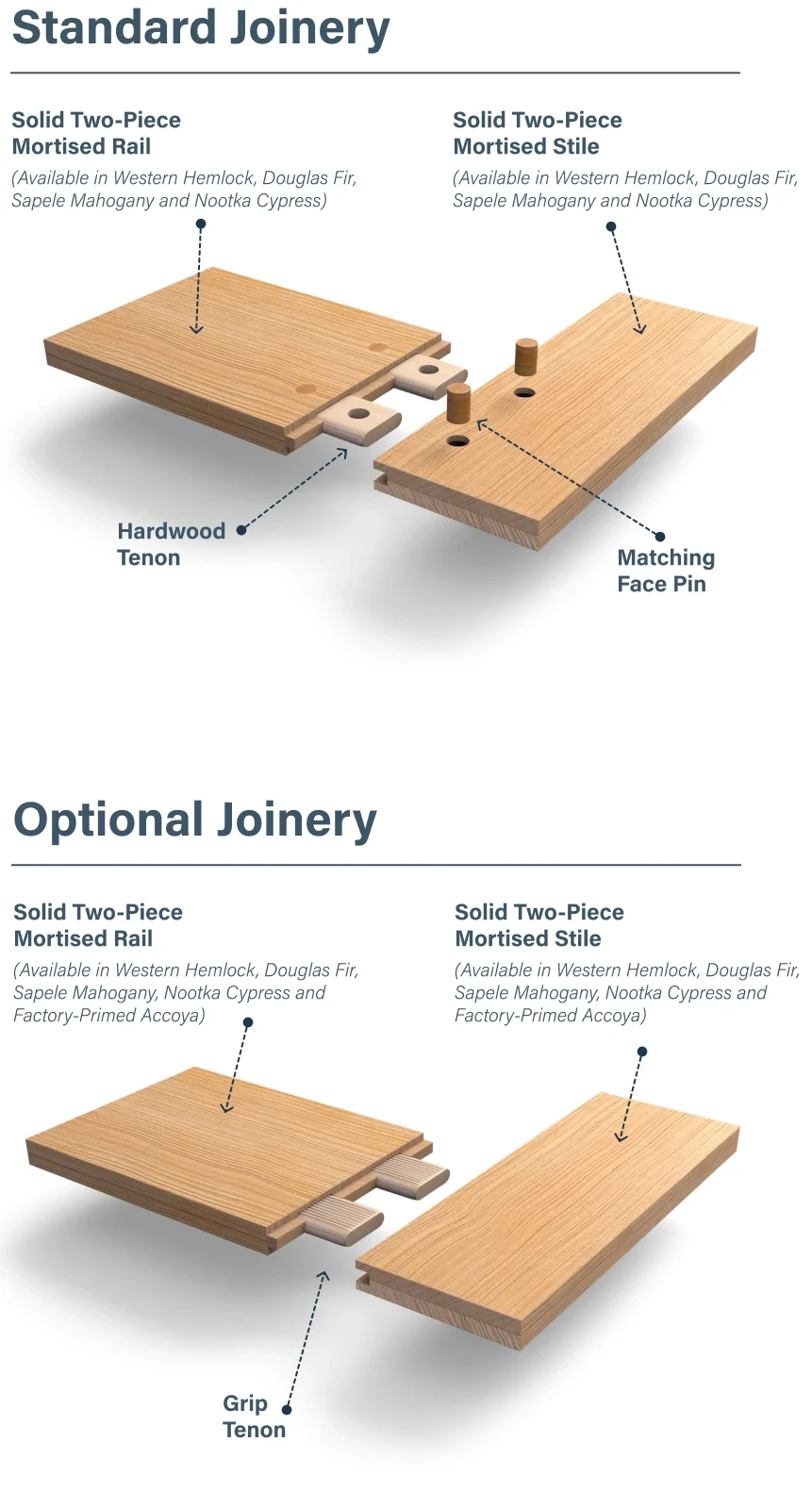
We started with a centuries-old solution; mortise and tenon joints and re-engineered it for coastal extremes. Reinforced and tested under pressure, the joint held up to 1,500 psi before failing. When it finally broke, the solid wood component itself split while the joint stayed intact.
Component Construction is Key
We didn’t stop by simply rethinking traditional joinery. To further enhance durability, we reimagined the way each component was constructed. Instead of relying on engineered, veneered rails or stiles, we used solid two-piece construction. This allowed us to construct a stronger door with maximum stability and minimize the risk of warping, splitting, or veneer delamination over time. By combining this approach with our mortise and tenon joinery, we created a system where each part works together to resist the stresses of coastal weather. For ultimate strength and longevity, we incorporated a through pin into the mortise and tenon assembly. This mechanical feature locks the joint together from front to back, preventing any movement even as the wood expands and contracts with changing humidity.
Not All Wood is Created Equal
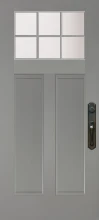
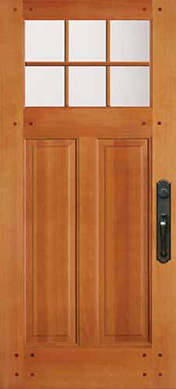
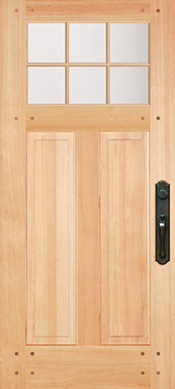
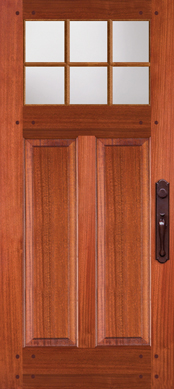
Choosing the right wood mattered just as much. Each species was selected for its stability and resilience:
- Accoya for dimensional stability, even when used with dark painted finishes.
- Douglas Fir and Western Hemlock for its traditional look and proven durability.
- Sapele Mahogany for moisture resistance and rich color.
- Nootka Cypress for natural rot resistance, and tight vertical grain.
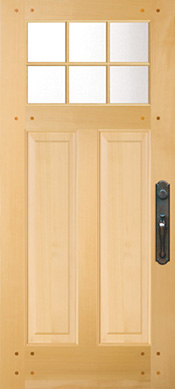
The Test
Every decision came back to one question: How will this hold up after years of brutal weather?
To find out, we installed an unfinished door on the home’s exterior; no protective coating, no overhang; and let Nantucket’s climate do its worst.
This wasn’t a lab simulation. The door faced southeast, fully exposed to prevailing storms. For two decades, it has endured hurricane-force winds, salt spray, freezing winters, humid summers, and relentless moisture cycles that destroy conventional wood doors.
After 20 years of unprotected exposure, the wood looks weathered, as you’d expect. But the structure? Still sound. Panels are secure. Joints are tight. The door operates smoothly.
Other wood doors in the area split, warped, and needed replacement. Our test door kept working. That performance gave us the confidence to offer a 10-year warranty—without requiring an overhang.
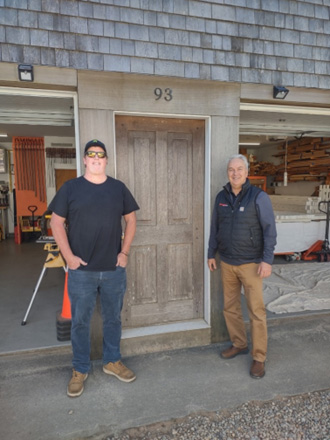
Lou Trottier, Simpson Regional Manager with Homeowner of Original Nantucket Install
The Legacy of the Nantucket Collection
What began as a single homeowner’s challenge became a new standard for wood door construction. Since launching the Nantucket Collection, architects and builders who had turned to synthetic materials now specify wood again. Homeowners no longer have to choose between authenticity and durability.
And the engineering isn’t just for Nantucket Island. Pacific Northwest homes battle constant rain and salt spray. Gulf Coast properties face extreme humidity and hurricanes. Mountain houses endure dramatic temperature swings and intense UV. Even inland locations with severe weather benefit from construction built to handle extremes.
The Nantucket Collection started with one question: Can authentic wood doors survive where standard products fail? Twenty years of exposure proved the answer. The original test door is still structurally-sound on that beautiful Nantucket home.



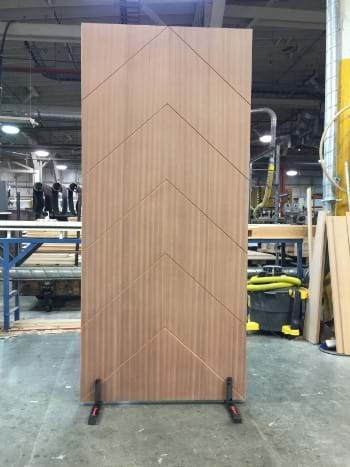
.jpg)