1-800-Simpson
 Email Us
When designing a distinctive entrance that reflects your home’s architectural character and personal style, the material you choose plays a pivotal role. The core difference between wood and fiberglass doors lies in design flexibility—and in this regard, wood offers creative freedom that fiberglass simply can’t match.
Why Customization Matters
The entry door serves as both a practical feature and a reflection of your home’s unique style. It sets the tone for your home, contributes to curb appeal, and ties together architectural details. Custom wood doors allow you to create an entrance that complements your home’s style, matches existing millwork, and expresses your unique taste. Fiberglass doors, no matter the quality, limit you to pre-manufactured designs that may not align with your vision.
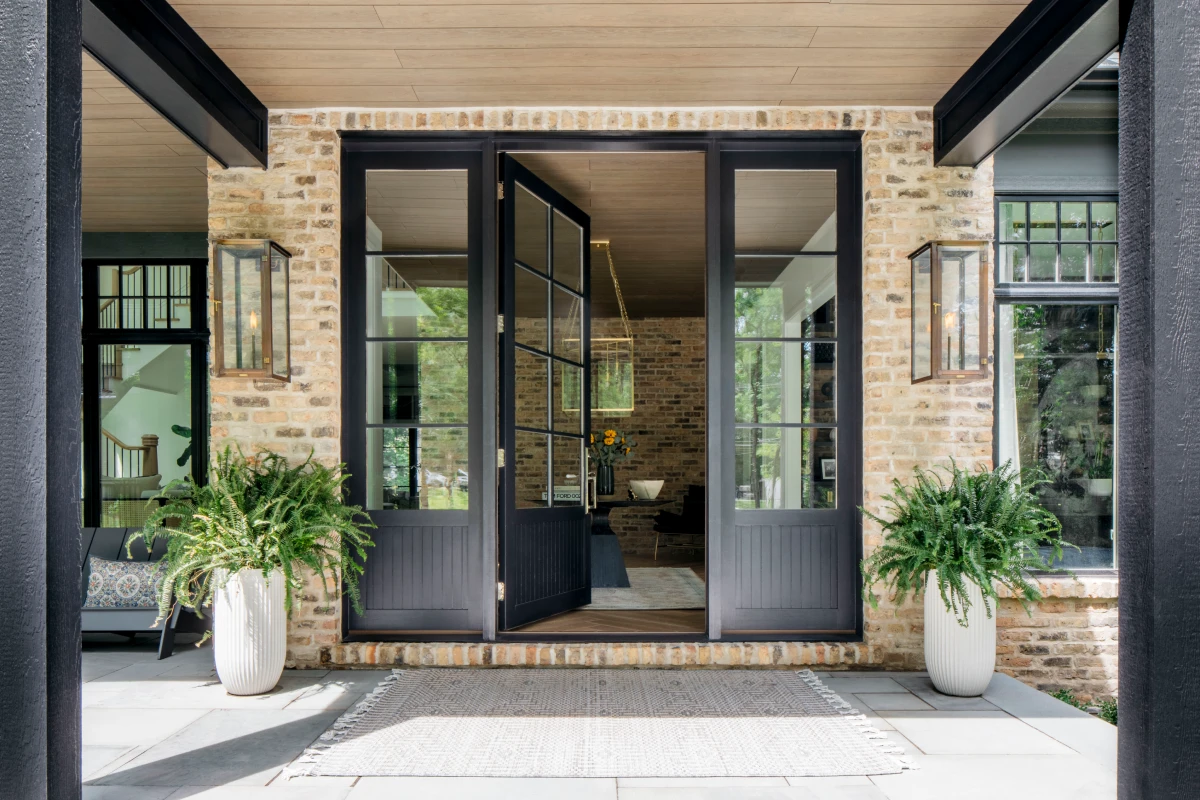
Wood Doors: Design Without Limits
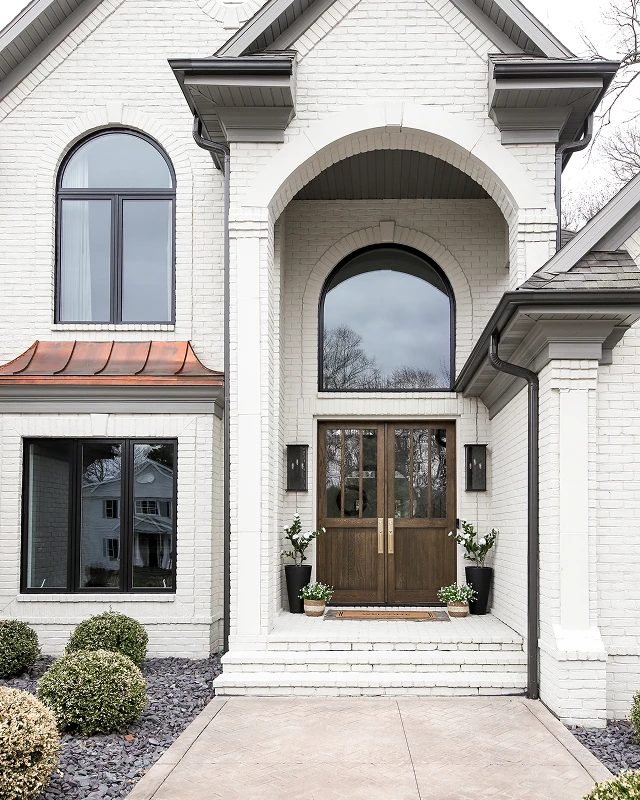
Wood is a highly workable material, allowing artisans to shape, carve, and configure it to exact specifications. Whether you’re working with non-standard openings, historical proportions, or specific architectural styles, wood adapts beautifully. This versatility is especially evident when designing arch top and round top doors—features that demand precise craftsmanship and an ability to create complex curves and forms. With wood, these arch-top door styles can be custom-built to fit unique entryways, whether you desire a dramatic, sweeping arch or subtle, rounded profile.
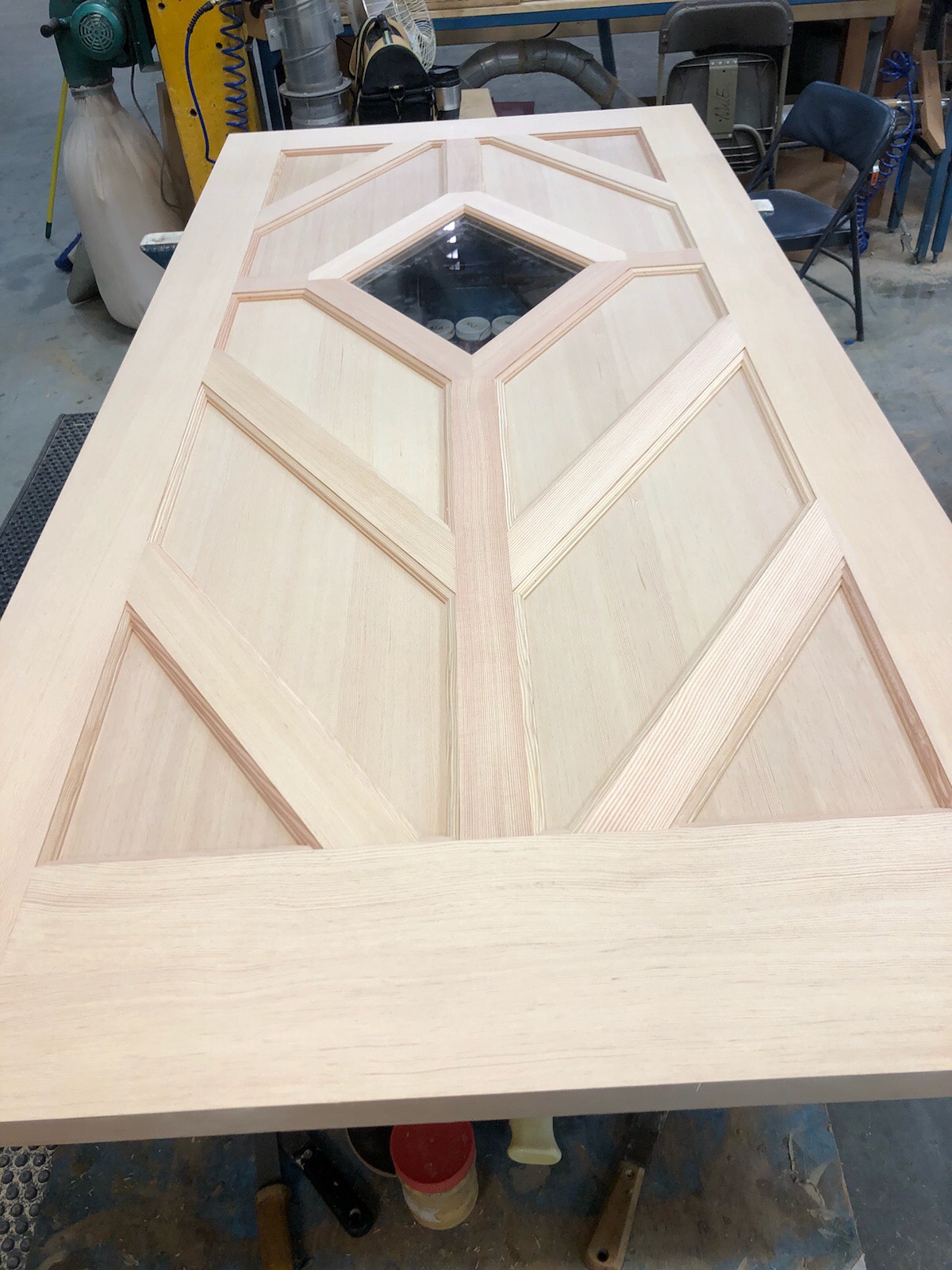
Arch top and round top doors are often used to enhance architectural elegance, making a making a grand statement at the entry while echoing other curved elements in the home, such as windows or interior arches. Custom woodwork ensures the curvature, molding details, and panel layouts harmonize with the overall design, whether for a Mediterranean villa, a Tudor revival, or a contemporary residence. In addition, wood allows for tailored glass inserts—be it stained, beveled, or patterned—to be integrated seamlessly into the arch, further personalizing the entryway and maximizing natural light.
Ultimately, the ability to execute these complex shapes and details underscores wood’s superiority as a door material for homeowners seeking true design freedom and architectural authenticity.
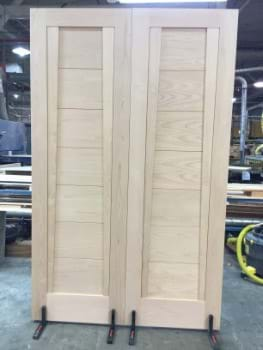
From unique panel configurations and custom molding profiles to hand-carved details and personalized motifs, wood doors can be tailored in every dimension. Glass elements can be integrated with custom shapes, stained or beveled finishes, and coordinated sidelites or transoms. The finish can be selected based on preference, with options including various stains and paints to complement the home.
Wood also excels at architectural integration. It can echo window muntin patters, match crown molding, and maintain proportional harmony with surrounding elements. Whether your home is craftsman, colonial, contemporary, or Mediterranean, a custom wood door can authentically represent its style.
Fiberglass Doors: Built-In Limitations
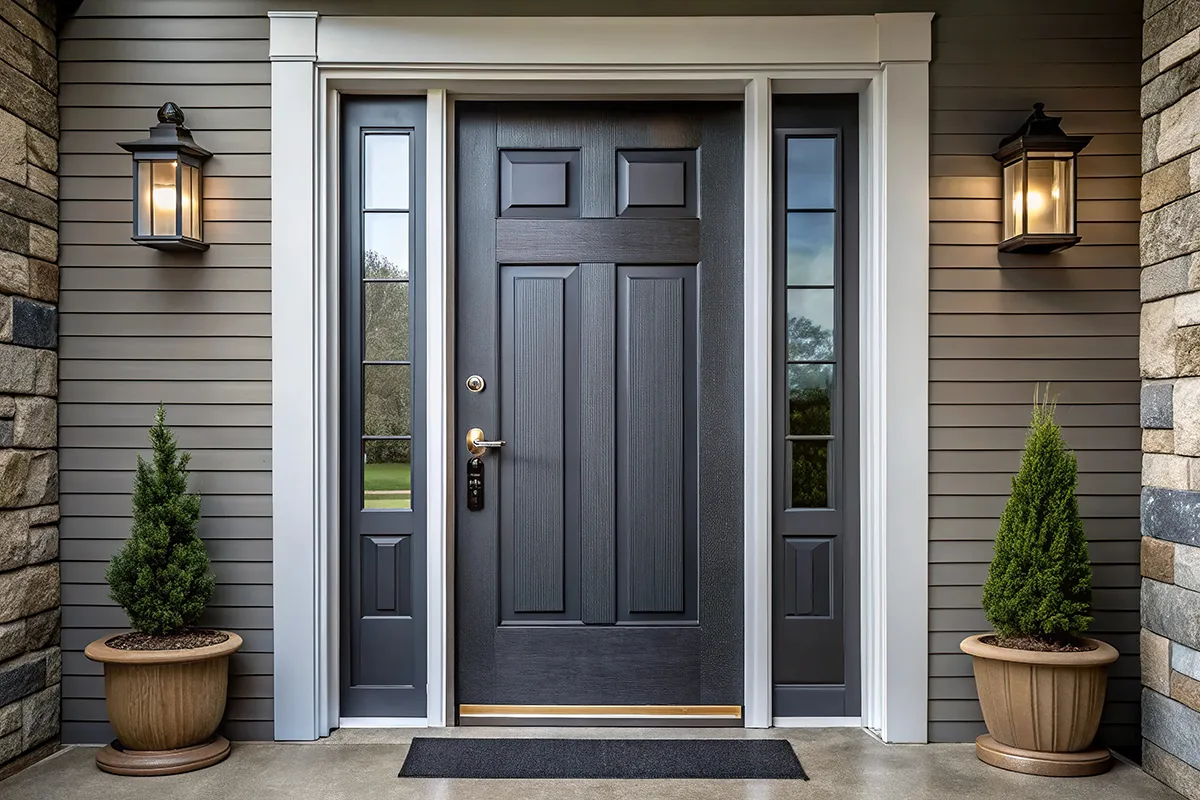
Fiberglass doors are manufactured using molds, which restricts design options. Each mold represents a significant investment, so manufacturers offer only a limited range of styles. Custom dimensions, unique panel layouts, and intricate carvings are not feasible without costly tooling.
The surface of fiberglass doors often features repetitive embossed grain patterns that lack the organic variation and depth of real wood. When placed alongside authentic wood elements, the synthetic nature becomes more apparent, disrupting design cohesion.
Because fiberglass doors are mass-produced, they often resemble others in the neighborhood, making it difficult to achieve a truly distinctive look.
When Custom Wood Doors Are Essential
Wood doors are the clear choice in scenarios where design integrity matters most:
- New Custom Construction: Integrate seamlessly with architectural plans from the start.
- Historic Renovation: Reproduce period-accurate details and joinery.
- Luxury Homes: Maintain the high design standard expected in premium residences.
- Architectural Styles: Styles like craftsman, colonial, or Tudor demand authentic materials.
- Designer Collaborations: Wood offers the flexibility needed to realize bold, creative visions.

Design Process: Wood vs. Fiberglass
Designing a custom wood door begins with your vision. Through consultation and architectural analysis, you’ll review drawings, select materials, and refine every detail before skilled craftspeople bring it to life.
With fiberglass, the process is more limited: browse a catalog, choose from standard sizes and colors, and accept a design that may not fully align with your home’s character.
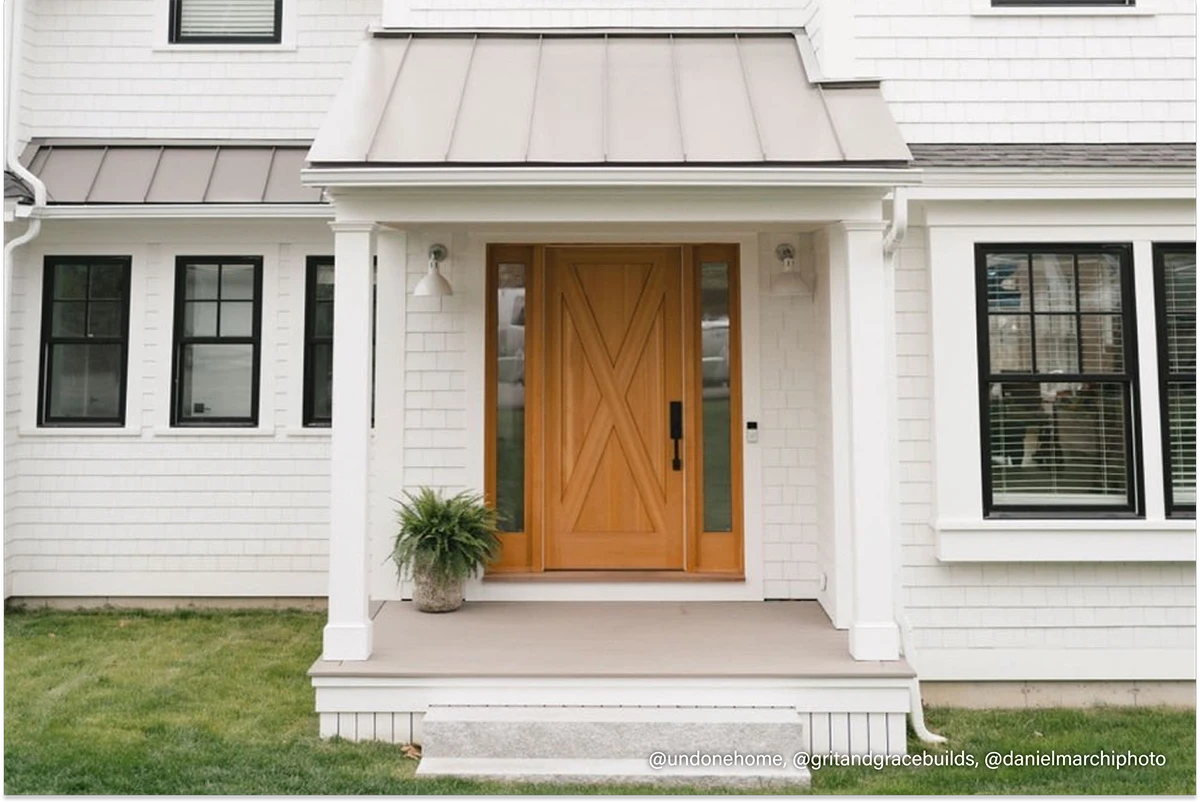
Real Design Flexibility Means Real Choice
Ultimately, the difference comes down to creative freedom. Wood doors allow you to design a one-of-a-kind entrance that integrates with your home’s architecture and reflects your personal style. Fiberglass doors require compromise—choosing from existing options and accepting limitations.
The Choice is Clear
When customization and design excellence are priorities, wood doors are the clear winner. They transform your entrance from a functional necessity into a defining architectural feature. For homeowners who value authenticity, craftsmanship, and creative expression, custom wood doors are the only choice that delivers true design freedom and lasting beauty.



.jpg)